
2019 Network Report Card Says Costs Decline in an HCN
The Texas Workers’ Compensation Network Report Card was released by the Research and Oversight Group on October 1, 2019.
The key findings from the evaluation in six important areas include:
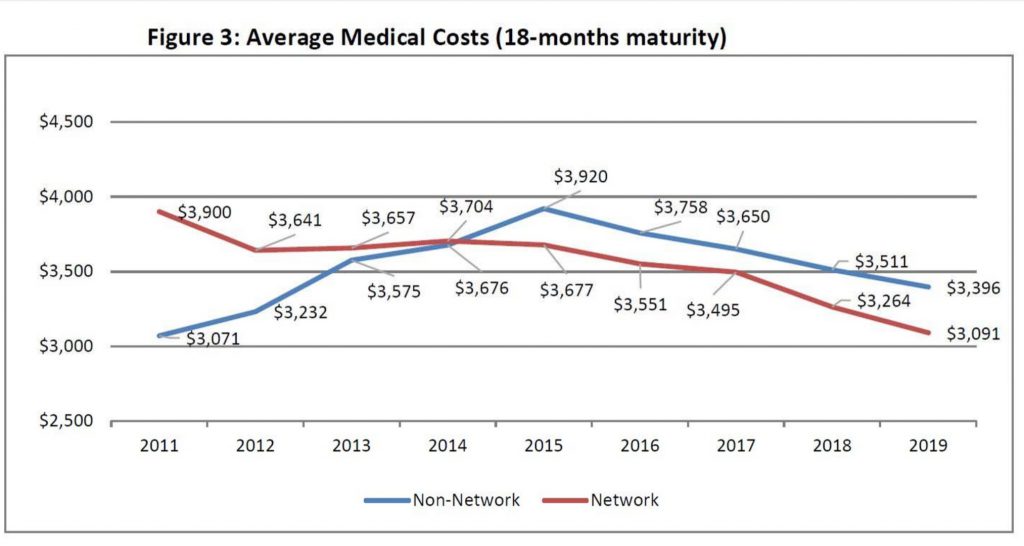
Medical Costs: Overall, networks have reduced per claim medical cost to lower levels than the medical costs for non-network injured employees, especially at 18-months maturity.
Medical Utilization: Overall, networks have reduced most hospital and pharmacy utilization measures to lower levels than for non-network.
Satisfaction with Care: More injured employees from networks reported higher levels of satisfaction than non-network injured employees.
Access to Care: Most networks provided nonemergency care sooner than non-network.
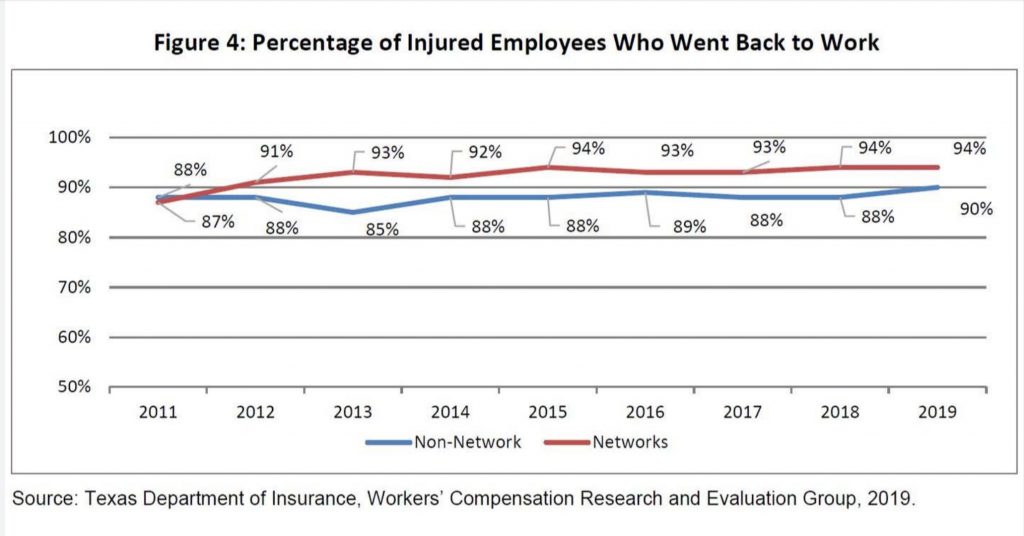
Return to Work: Most networks reported higher return-to-work rates than non-network.
Health Outcomes: Most networks had higher physical and mental functioning scores than non-network.
The overall average medical cost for network injured employees at 18 months (claims from previous report card) was lower than non-network injured employees since 2014.
Since 2012, network claims consistently have higher return-to-work rates than non-network claims.
In 2005, the 79th Texas Legislature passed House Bill 7, which authorized the use of workers’ compensation health care networks certified by the Texas Department of Insurance. This legislation also directed the Workers’ Compensation Research and Evaluation Group to publish an annual report card comparing the performance of certified networks with each other, as well as with non-network claims, on a variety of measures including:
-
-
-
- health care costs;
- utilization;
- satisfaction with care;
- access to care;
- return to work; and
- health outcomes.
-
-
In March 2006, TDI began certifying workers’ compensation networks. There are 30 networks covering 254 Texas counties that are certified to provide workers’ compensation health care services to insurance carriers as of June 1, 2019. Among the certified networks, 20 were treating injured employees as of May 31, 2018. Since the formation of the first network, a total of 1,026,796 injured employees have been treated in workers’ compensation networks.
Past years’ network report cards can be found at this link.


 FOLIO
FOLIO
