Precedents: Float Like a Butterfly; Fall Like a Tree Understanding the Temporary Direction Doctrine
Pull up a chair. We are going to tell you how an ill-fated boxing match in the Golden Triangle laid the foundation for the recognition of the temporary direction doctrine under the Texas Workers’ Compensation Act. It’s a long way from knocking out someone’s teeth to rolling off a roof, but that’s the journey we are going to take.
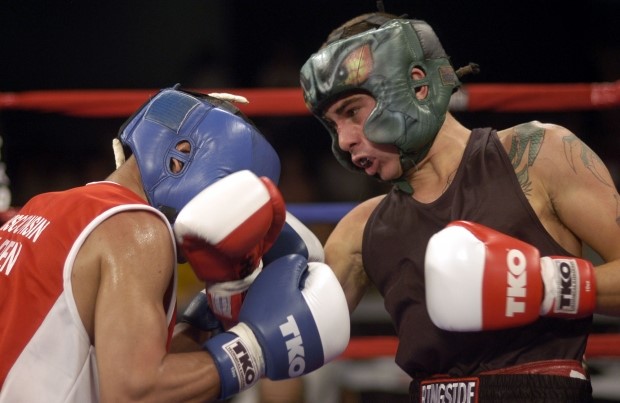 In the early 1970s, Gordon Van Hook was employed as a part time janitor for the Nederland YMCA. The “Y” leased part of the old Nederland Central High School.
Van Hook’s supervisor, Tom Brown, had instructed him that if he saw vandals breaking windows in the school, he was to “stop them” from doing so. One Wednesday in the winter of 1974, Van Hook was cleaning up in the YMCA/school parking lot when he saw about fifteen younger boys and three or four older boys heaving rocks through the windows.
Van Hook told them to stop; they resented it, and one of the older boys invited Van Hook to fight. At this point some older men from a boxing club which used another part of the school came up and suggested that Van Hook and one of the older boys “put on the gloves” to settle the dispute. Van Hook agreed. But, after three rounds, he had two broken teeth. So, Van Hook filed a claim for workers’ compensation benefits.
In St. Paul Ins. Co. v. Van Hook, 533 S.W.2d 472 (Tex. Civ. App.—Beaumont 1976, no writ) the court of appeals observed that if an employee is injured while following the instructions of his employer, it is in the course and scope of his employment, even though at time of injury he is not performing his usual tasks. The place of the occurrence of the injury is important only as it throws light on whether what the employee was doing was in or about the furtherance of employer’s affairs.
Van Hook’s supervisor admitted he had asked Van Hook to try to eliminate vandalism or keep people from vandalizing the building. The question the court was confronted with was whether the manner in which Van Hook tried to eliminate the vandalism removed him from the course and scope of his employment. The court had no problem concluding that it did not.
There is certainly no question here but that the plaintiff was trying to follow his employer’s instructions. He might have chosen wiser means (such as phoning the police), but a seventeen year old boy is calculated to be influenced by the suggestion of adults to settle the dispute in the ring. Had the fight and injury occurred on the parking lot, there is little question of its compensability. To cut it off when they moved into the boxing ring would, we think be unreasonable and contrary to previous commitments to construe the Act liberally, to give effect to its purpose—the protection of employees.
The Van Hook case does not mention the temporary direction doctrine. To make that connection, you have to travel all the way to the other end of the state.
If you were handling comp in Texas in the 1970s or 1980s, you may recall the Upchurch Lawfirm in Amarillo. The firm had a sizable practice and a number of talented young lawyers to represent injured workers on the high plains of the Texas panhandle. The firm also employed part-time law clerks from time to time. James Biggs was one of those law clerks.
In December 1975, Biggs fell and was seriously injured during working hours while attempting to repair the roof on a two-story apartment unit owned by, and at the direction of, John Lesly, an associate of the law firm. Biggs filed a claim for workers’ compensation benefits, which the carrier disputed because repairing a  roof has nothing to do with a law clerk’s legal duties. The trial court disagreed, rendering a judgment in favor of Biggs and against the workers’ compensation carrier.
The case was eventually appealed to the Texas Supreme Court, where the court’s opinion in Biggs v. U. S. Fire Ins. Co., 611 S.W.2d 624 (Tex. 1981) described the full allegations. According to the court’s opinion, while employed by Upchurch, Biggs performed a wide variety of duties, consisting primarily of running errands for Upchurch and the employees in the law office. Many of these errands were related to Upchurch’s law practice and many were personal errands for Upchurch, the associates, and the secretaries.
Personal errands that Biggs performed at the direction of Upchurch included babysitting for Upchurch’s children, taking his children to dinner at Six Flags Over Texas, driving Upchurch’s automobiles to and from Fort Worth for repairs, delivering packages and liquor to Upchurch’s home, changing tires and repairing Upchurch’s automobile, and acting as a night watchman at a warehouse owned by one of Upchurch’s friends.
In addition, Biggs performed personal errands for the law firm’s associates. Biggs testified that he changed a flat tire on one associate’s car and a battery in the car of the associate’s wife. Once, the associate directed Biggs to pick up and deliver packages to the associate’s wife. Biggs testified that on separate occasions the associate required him to pick up liquor, ammunition, and sporting equipment.
For another associate, Biggs also changed a flat tire and a battery. One weekend, the associate directed Biggs to water plants at his home while his wife was out of town. Routinely, He also directed Biggs to pick up rents from the manager of an apartment unit that the associate owned several blocks from the law office. In fact, the associate even instructed Biggs to pick up these rents after Biggs returned to work after his injuries. On other occasions, Biggs also delivered screens and made repairs on the associate’s apartment unit.
Biggs testified he was certain that Upchurch knew of these personal errands because Upchurch often made passing remarks about them.
The court examined whether an injury that was sustained at the direction of a supervisor but which had nothing to do with the actual work for which the employee had been hired would be compensable under the Act. In doing so, the court started with the statutory text.
An essential element that an employee must prove in order to recover workers’ compensation benefits is that the injury was sustained in the course of employment. Unless this is shown, the employee can only seek relief for his injury through his common law causes of action and in such instances the employer retains all common law defenses. As a general rule an injury sustained in the course of employment (1) must be of a kind or character originating in or having to do with the employer’s work, and (2) must have occurred while engaged in the furtherance of the employer’s business or affairs.
There are exceptions to this general rule. One exception applicable to this case is found in [the Act]. This section provides in part, and the jury was instructed, that:
An employee who is employed in the usual course of the trade, business, profession or occupation of an employer and who is temporarily directed or instructed by his employer to perform service outside of the usual course of trade, business, profession or occupation of his employer is also an employee while performing such services pursuant to such instructions or directions.
Under this so-called “temporary direction” exception, if an employee is directed by his employer and is then injured, his injury is sustained in the course of his employment. In other words, an employee does not forfeit his workers’ compensation coverage while acting in obedience to his employer’s orders. The purpose underlying the enactment of the exception was to eliminate a dilemma that would otherwise face an employee when instructed to perform a task outside his employer’s usual business, to-wit: either obey his employer and lose his compensation coverage or disobey his employer and lose his job.
The court rejected the application of the temporary direction doctrine because, it reasoned, the exception only applied to directions given by employers and the evidence was undisputed that Biggs had been directed by an associate of the firm, and not Upchurch, his employer. The court noted the lack of testimony or testimonial inference that the associate’s directions to Biggs to repair the roof in question were given with Upchurch’s authority.
The Supreme Court rejected this reasoning, writing:
It should be recognized at the outset that, in line with the express terms of the “temporary direction” exception, compensation has generally been allowed whenever the employer directs or instructs any work done. Only a few cases, however, have been decided in this State involving the exact point presented herein; that is, where directions are given by one of the employer’s supervisory personnel as opposed to the employer himself.
One of the cases the Biggs court relied upon was the case where our intrepid YMCA custodian climbed into a boxing ring at the direction of his employer only to leave with fewer teeth than he climbed in with – St. Paul Insurance Co. v. Van Hook. Based on the rationale of that case, the Supreme Court held that the temporary direction doctrine “also applies to work ordered by a supervisor so long as the order is authorized by the employer, regardless of whether the order benefits the employer’s business or is personal in nature.”
The rule is the temporary direction doctrine. Remember it using the roofing law clerk and boxing janitor cases.