Precedents: Motels, Diners and Dives
Boston Red Sox left-handed pitcher, Martin Perez, is not having a bad year in the CoVID-19-shortened major league baseball season. The 29 year old native of Venezuela sits at 2-3 with an ERA of 4.07 three weeks into the season.
At the very least, Perez hasn’t lost any games to a hotel-room door – unlike his experience at the start of the 2017 season. At that time, Perez was a starter for the Texas Rangers. While on a road trip to New York, Perez tore the nail off his thumb after catching it in the door of his hotel room. He also fractured the tip of the thumb of his right (non-pitching) hand. The Rangers placed Perez on the 10-day disabled list.
 At the time, the incident caused us to consider the boundaries of compensability for injuries that occur while on work-related travel. This seems like a good time to revisit the rule in such cases. Understanding the rule takes us on a road trip of our own, one that will take us to a series of Texas hotels and motels in the 1960s through the 1990s, with stops in Dallas, Fort Worth, and Kerrville, Texas.
The Texas rule for out-of-town injuries was announced by the Texas Supreme Court in Shelton v. Standard Insurance Company, 389 S.W.2d 290 (Tex. 1965). The court stated a general rule that an employee, whose work entails travel away from the employer’s premises, is considered to be in the course of his employment when the injury has its origin in a risk created by the necessity of sleeping or eating away from home, except when a distinct departure on a personal errand is shown. Some courts have referred to the Shelton rule as the “continuous coverage doctrine.” However, as will be shown herein, Texas cases make clear that coverage is not “continuous” during out of town travel. The Shelton opinion does not use the term “continuous coverage.”
Shelton had been hired to drive a truck from Abilene, Texas to Wichita, Kansas by way of Dallas, Texas and return. He started from Abilene but before reaching Dallas the truck he was driving broke down west of Fort Worth. This delayed him by several hours. He checked into a motel in Dallas for the night. After showering and changing clothes, Shelton started to walk across the highway to a restaurant to eat his supper. While walking across the highway he was hit by an automobile and seriously injured.
The court found that Shelton was not engaged in a distinct departure on a personal errand at the time of his accident. The court held that Shelton’s injury was received while in the course of his employment. The court reasoned that Shelton’s work entailed travel away from the employer’s premises and his injury had its origin in a risk created by the necessity of sleeping or eating away from home.
Shelton involved facts that fell on the compensable side of the rule. Three other cases involved injuries that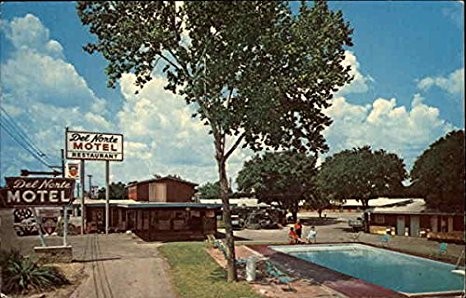 occurred while traveling that were found not to be in the course and scope of employment.
In Hardware Mutual Casualty Company v. McDonald, 502 S.W.2d 602 (Tex. Civ. App-San Antonio 1973, writ refused n.r.e.), James McDonald drowned while on a West Texas business trip for his employer, Walker-McDonald Bit Company, Inc. After completing his duties for the day, McDonald checked into the Del Norte Motel in Kerrville.
That evening, McDonald drove to the Ranch House Café, which was situated between a highway and the Guadalupe River about five miles west of town, in order to have dinner and drinks. After dinner, McDonald returned to his motel room and made several telephone calls. Later, he returned to the café, where he sat at a bar for some time before leaving the café near midnight. McDonald was found dead the next day near a riverbank behind the café. His surviving spouse argued that the claim was covered under Shelton, and that McDonald’s death occurred in the course and scope of employment because it occurred during a business trip and was connected to the risk of sleeping or eating out of town during that business trip. The Court of Appeals rejected the argument. The court wrote:
“There is no explanation of why he subsequently determined to go down to the river alone and without permission from the owner. It is clear, however, that such activity did not have anything to do with furtherance of his employer’s business, and his subsequent drowning was not of a kind and character of injury that had to do with and originated in the employer’s work or business.
Jimmy Walker was also injured while on a business trip. Walker’s injury actually occurred on the premises of the motel where he was staying. The Court of Appeals concluded that Walker’s injury, however, did not occur while in the course and scope of his employment. Walker v. Texas Employer’s Insurance Association, 443 S.W.2d 429 (Tex. Civ. App-Fort Worth 1969, writ ref’d).
Walker and a co-worker, Bernie Rhodes, were movers for Luther Transfer & Storage, Inc. After completing their duties for the day, both men checked into the Fleetway Motel in Fort Worth. They ate in the restaurant connected with the motel, went across the street for a 6-pack of beer, and drank the beer in their motel room. Walker and Rhodes encountered another motel guest with whom they went across the street and drank a couple of more beers. Returning to the hotel, Walker went back to his room with the intention of going to bed. Rhodes and the hotel guest tried to talk Walker into going down to the guest’s room for more beer. After initially resisting the suggestion, Walker went to the room, where, upon entering, he heard a commotion and someone in the back of the room say, “Move and let me kill him.” Walker turned around and started to leave the room, at which point he suffered a gunshot wound to his back.
Walker contended that he was covered under Shelton for any activities that may have occurred while staying in the hotel. The Court of Appeals rejected Walker’s contention, writing:
Plaintiff’s testimony shows that his visit to the room down the hall did not have anything to do with furtherance of his employer’s business; that his injury was not of a kind and character that had to do with and originated in the employer’s work or business. Neither [the hotel guest] nor his unnamed friend had any connection whatever with the plaintiff’s employer or its business.
In Appeals Panel Decision 950973, the employee and his supervisor checked into a hotel for an out of town business trip. They decided to drive to a nearby city to have dinner and beer. Upon returning from the restaurant, the claimant was injured in a motor vehicle accident. He contended that his trip to the restaurant was compensable under the continuous coverage doctrine. The Appeals Panel rejected the contention, writing:
“We believe that the rationale in Shelton, Purdy, Potter and Mapp tells us that an employee, when housed near a job site by employer and away from his city of residence or when away from his hometown temporarily on order of his employer, may, or may not, be covered for injury under the 1989 Act when eating “close” or “nearby” the job site or the housing provided or while occupying the assigned residence.
Thus, the appeals panel has recognized that an employee may or may not be in the course and scope of his employment when traveling out of town on business. The decision depends upon the nature of the risk causing the injury.
Finally, in Appeals Panel Decision 960313 an airline flight attendant was injured while on layover after she had checked into a hotel and went to dinner with two coworkers. They ultimately wound up at a scenic viewpoint. There the travelers stepped onto a barrier wall, where the claimant assumed a “cheerleader pose.” During the course of this activity, a gust of wind caused her to lose her balance, falling backwards over the scenic overlook, where she was injured. Citing Appeals Panel Decision 950973, the Appeals Panel noted that a number of cases involving injuries sustained by employees away from their work sites, either while in a motel or hotel or while engaged in obtaining meals, found some of the injuries to be compensable and others to be not compensable. The Appeals Panel placed the injuries in this case in the noncompensable category, writing:
“Notwithstanding that the claimant was being paid per diem at the time she fell, she had the burden of proving that her injury was sustained in the course and scope of her employment. She did not articulate just how her driving to the scenic overlook, after having eating and having driven back to her hotel, and posing for a picture on top of a barrier wall, somehow constituted an activity which originated in or had to do with her employer’s business and how she was furthering the business or affairs of her employer at the time; nor did she articulate just how her accident resulted from a risk or hazard reasonably inherent in or incidental to her employment.
Taking these cases as a group, and applying the Shelton rule, it is clear that the answer to the question of where to draw the line between a compensable and a non-compensable injury that is suffered by an employee such as pitcher Martin Perez depends in large part upon whether the risk of the injury is reasonably inherent to a risk or hazard of sleeping or eating overnight in a hotel.