Supreme Court Agrees to Hear OCIP Case
The Texas Supreme Court has granted a petition for review and scheduled oral argument in a case that considers the effect of an Owner Controlled Insurance Program on the exclusive remedy doctrine. In TIC Energy & Chem., Inc. v. Martin, 13-14-00278-CV, 2015 WL 127777 (Tex. App.—Corpus Christi Jan. 8, 2015, pet. filed), the Corpus Christi Court of Appeals considered a case in which Kevin Bradford Martin, the employee of Union Carbide Corporation, a jobsite general contractor, sued TIC Energy & Chemical, a subcontractor on the jobsite, alleging that its negligence was a proximate cause of an accident that resulted in the amputation of Martin’s leg.
Martin v. TIC Energy & Chemical, Inc.):
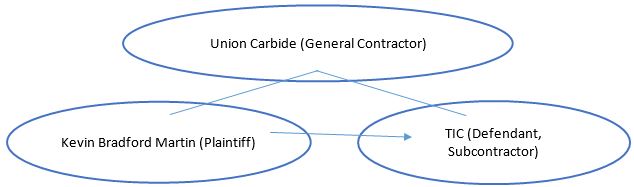
Martin sought and received workers’ compensation benefits from TIC, which, in reliance upon Etie and Garza, argued that it was entitled to the exclusive remedy bar by virtue of its participation in the project’s OCIP. Martin argued that the language in § 406.123 is trumped by the language in § 406.122, which states that a subcontractor who enters into an agreement with a general contractor and “assumes the responsibilities of an employer for the performance of work” is not a deemed employee. The court of appeals agreed:
The parties direct us to no other cases, and we find none, applying section 406.122. In particular, there appear to be no cases explicitly addressing a scenario, such as the one presented here, where a subcontractor enters into both: (1) an agreement with a general contractor under which the general contractor agrees to provide workers’ compensation coverage to the subcontractor’s employees, seeTex. Lab.Code Ann. § 406.123(a); and (2) a written agreement with the general contractor under which the subcontractor assumes the responsibilities of an employer for the performance of work. See id. § 406.122(a). In such a scenario, section 406.123(e) unambiguously states that the general contractor is deemed the “employer” of the subcontractor for TWCA purposes, but section 406.122(b) unambiguously states that the subcontractor is not deemed an “employee” of the general contractor for TWCA purposes. See id. §§ 406.122(b), 406.123(e).
We therefore conclude that, as applied to these facts, the two statutes irreconcilably conflict. But TIC did not present this issue to the trial court in its motion for summary judgment; in fact, TIC’s motion did not mention section 406.122 at all. Moreover, neither party argued, at the trial court or on appeal, that the statutes conflict; rather, they both argue that one statute applies and the other does not. The issue of how to resolve the conflict between the statutes was thus not before the trial court, and so we do not consider it here. See Tex. R. App. P. 33.1(a), 47.1. We merely hold that, because its motion did not establish that section 406.122(b) does not apply, TIC did not meet its summary judgment burden to establish its entitlement to judgment as a matter of law.
The Texas Supreme Court has previously denied the petition in two cases that were arguably decided to the contrary: Etie and Garza. TIC’s position in Martin is that:
Section 406.122 provides the general rule that independent contractors are not employees for purposes of the TWCA, but then section 406.123 provides an exception where a general workplace insurance plan such as an OCIP is involved. In that particular circumstance only, a participating independent contractor is deemed an “employee” for purposes of workers’ compensation laws, and both the statutory employer (Union Carbide) and the statutory employee (TIC) receive the benefits of that relationship, regardless of independent contractor status. This outcome provides a legislatively-created incentive for both general contractors and subcontractors to participate in general workplace insurance plans such as OCIPs, and helps ensure “quality and uninterrupted coverage to the lowest-tiered employees.” HCBeck, 284 S.W.3d at 359.
Martin was filed in the Texas Supreme Court on February 20, 2015. Full briefing was concluded November 10, 2015. The case will be argued before the full Supreme Court on February 9, 2016.